Why Does Material Selection Matter?
Discover the materials used by SMB Medical in orthopaedic component manufacturing and how their properties influence production processes.


It all starts with the raw material
Before forging and machining even begin, every orthopaedic component starts with a fundamental choice: the material from which it will be manufactured.
At SMB Medical, we mainly work with titanium alloys, steel alloys and cobalt-chrome alloys, each with different properties and specific processing requirements.
Raw material selection not only influences the manufacturing process but is also closely linked to the component's function and intended application.
One component, different materials
In the orthopaedic industry, the same component can be manufactured using different metal alloys.
Material selection depends on several factors, including the characteristics of the patient receiving the implant and the specific requirements of its intended application.
Each material offers different properties in terms of mechanical strength, weight, wear resistance and biocompatibility, which refers to its ability to interact appropriately with the human body.
This means that a component's geometry can remain the same, while the material used may vary depending on its intended application.
Titanium, stainless steel and cobalt-chrome: what's the difference?
Although these materials can be used to manufacture similar components, they differ in their properties and how they respond to manufacturing processes.
- Titanium alloys: widely used in the orthopaedic industry, they are known for their excellent strength-to-weight ratio and biocompatibility.
- Stainless steel alloys: offer good mechanical properties and, depending on the specific alloy, require particular processing conditions.
- Cobalt-chrome alloys: characterised by high hardness and wear resistance, they can be particularly challenging to process, especially during high-temperature operations.
At SMB Medical, titanium alloys represent a significant proportion of the materials processed, while cobalt-chrome is among the most demanding materials to work with during forging.
"Different materials require different manufacturing approaches, even when producing the same component."
From metal bar to production
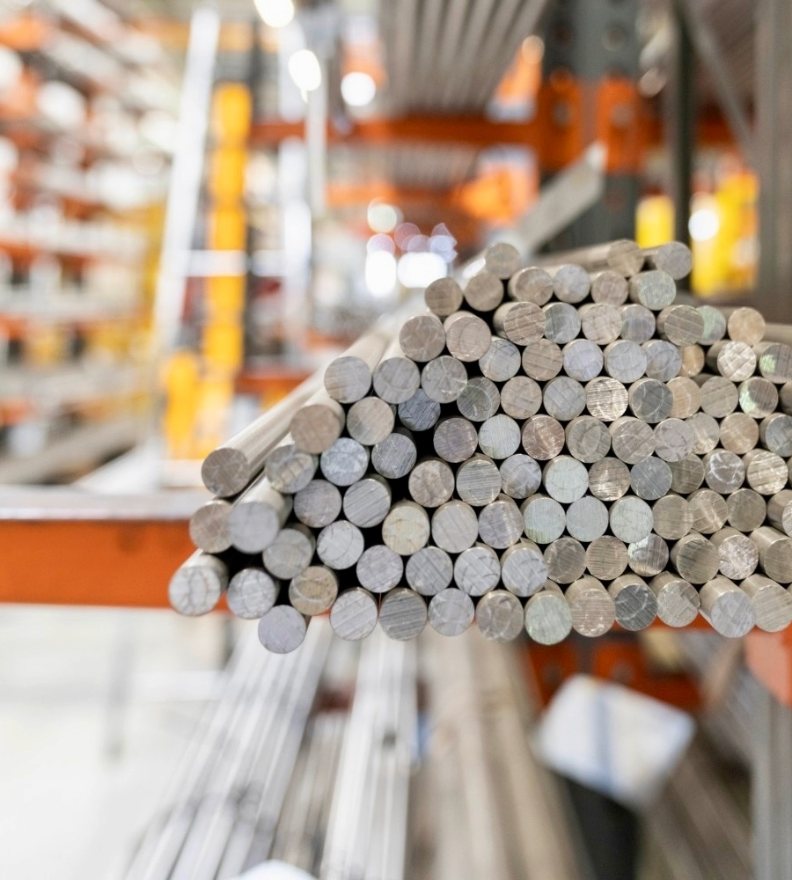
Raw materials arrive at SMB Medical in the form of metal bars, accompanied by supplier certificates documenting their characteristics.
Once received, the material is identified and stored in the warehouse, where a colour-coding system helps distinguish between different material types.
Before production begins, the bars are cut to predetermined dimensions, creating the pieces of material required for subsequent manufacturing operations.
This preparation helps maintain an organised material flow and preserve material identification throughout the manufacturing process.

Every material behaves differently
During forging, the properties of each alloy directly influence the conditions required to shape it.
Working temperatures vary depending on the material. Certain steel alloys and cobalt-chrome require particular attention due to their mechanical properties and behaviour at high temperatures.
Titanium alloys may also require specific treatments, such as annealing or pickling, depending on the manufacturing process.
The challenge is not simply to achieve the required geometry, but also to preserve the material's properties throughout the transformation, avoiding damage or unwanted alterations.
Even scrap material has value
Raw material processing inevitably generates metal scrap, for example during cutting and subsequent manufacturing operations.
At SMB Medical, this metal scrap is collected and then sent to a specialised external company for remelting, allowing the material to be recovered and reused.